
What Marshall County Deed Records Convey
A deed's type describes what the instrument does. Its parties, recording date, and legal description identify the actual transaction, so read the recorded document rather than trusting an index label to define its effect.
| Deed Type | What It Does | Common Use |
|---|---|---|
| Warranty deed | Conveys the described interest with stated warranties | Ordinary purchase transfer |
| Quitclaim deed | Conveys whatever interest the grantor holds | Family, entity, or title cleanup |
| Trustee or personal-representative deed | Conveys under trust or estate authority | Trust and probate transfer |
| Sheriff or tax deed | Records a transfer following a statutory process | Judicial or delinquent-tax sale |
| Plat or replat | Records a division and lot framework | Subdivision and description research |
A mortgage records an encumbrance, not ownership. Liens work the same way. Follow releases, assignments, satisfactions, and foreclosure records so an old lien does not appear active merely because its filing turned up first.
Search Marshall Deed Records in Tapestry
The Recorder's online route is the Fidlar Tapestry/EON portal, where party, document-type, date, consideration, legal-description, and book/page fields narrow a deed search. Names can be stubborn. Try variants, initials, entity suffixes, and the percent-sign convention the system uses in place of apostrophes.
| Search field | Use | Cross-check |
|---|---|---|
| Grantor / Grantee | Find parties by transaction role | Search both roles and variants |
| Document type | Limit deeds, mortgages, releases, or plats | Read the actual image |
| Recording dates | Bracket a transfer | Do not substitute closing date |
| Subdivision / description | Identify the land | Match lot, acreage, cabinet or slide |
| Instrument / book-page | Retrieve one record | Preserve the exact citation |
The login capture shows the official online access point.
The county publishes no confirmed start year for the online records. A deed missing from the portal may still sit in the Recorder's holdings.
Walk the Marshall County Grantor-Grantee Index Backward
A chain search starts with the newest deed, never a guessed historic owner. Match the deed's legal description to the tax parcel before stepping back to the prior transaction.
- Find the newest conveyance with the current owner as grantee.
- Record its grantor, date, instrument, type, and complete legal description.
- Search that grantor as a prior grantee and locate the deed by which that party acquired the same land.
- Repeat while tracking description changes, plats, probate, and court events.
- Move to direct and reverse deed-book indexes or microfilm when online coverage ends.
- Grantor
- The party transferring the stated interest.
- Grantee
- The party receiving that interest.
- Chain of title
- The connected sequence of conveyances affecting the same land.
- Book/Page and Instrument Number
- Two ways a recorded document may be cited and retrieved.
Marshall Deed Descriptions Keep Chains Aligned
Surnames can connect unrelated deals. Match lot and block, subdivision, acreage, section-township-range, and plat references at every step of the chain. Marshall records also show APN, PIN, and tax ID forms, but those assessment identifiers can change after a parcel split or combination. Deed descriptions and plat references are the durable bridge.
Subdivision research needs its own trail. Keep cabinet, slide, and instrument references. A planning approval, standing alone, does not prove the plat was ever recorded. Road vacations, replats, easements, and assignments can change how a later deed describes access or a lot without any ordinary sale taking place.
Older Marshall Deeds Continue on Microfilm
Older Marshall County deeds survive on microfilm. The Indiana State Library microfilm inventory lists lettered and numbered deed volumes, including runs spanning 1866 through 1879. Those years are examples, not a cutoff. Use the Recorder's direct and reverse indexes to find the book and page. Then request the exact volume or film. Asking for a broad year only slows the search. The State Library county guide also points to local repositories and maps, while pre-county federal patents may sit in the Indiana State Archives among LaPorte and Winamac land-office materials.
Coverage gap. No official fixed start year for Marshall County's online deed index was located; ask the Recorder before declaring an older record missing.
Marshall Court Records Bridge Deed Gaps
A clean surname chain often breaks. Estates, foreclosures, quiet-title judgments, partitions, and lien-enforcement cases do the interrupting. Search Indiana MyCase for the parties. The docket omits some filings. Request the complete record from the Marshall County Clerk, since MyCase also excludes sealed and nonpublic material and converted events may appear without every filing. Probate work ties the decedent, fiduciary authority, court order, and personal-representative deed together. Foreclosure work traces the lis pendens, judgment, sale or confirmation, and final recorded deed. The court file explains authority.
Trace Marshall County Recorded Encumbrances
A deed search alone cannot answer an encumbrance question. Run the same parties and legal description against mortgages, mechanic's liens, judgments against land, assignments, satisfactions, and releases. The first lien filing says nothing about today. An obligation may already be satisfied. Match each release to the correct instrument and parties. Business collateral shows up in UCC records through INBiz, though those filings never substitute for Recorder land records. MyCase may explain lien enforcement while the recorded release or sheriff's deed documents the land-record result.
Marshall Property Records Trigger Fraud Alerts
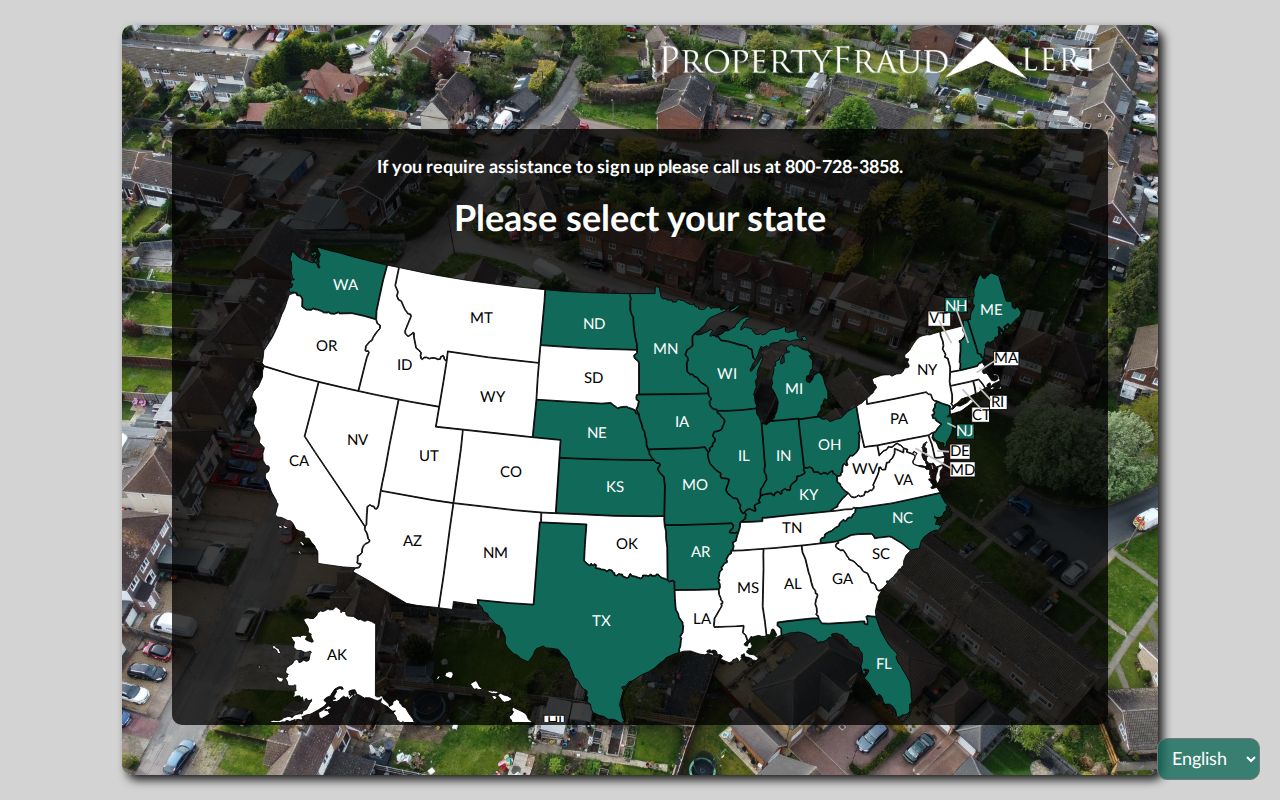
The Recorder connects property owners to Property Fraud Alert. The service notifies enrollees when a document is recorded under a monitored name. That early warning matters. An unexpected filing can be raised with the Recorder promptly. The service's official landing page shows the enrollment route.
Fraud alert is monitoring, not title insurance. It cannot block a recording, judge validity, fix an index, or guarantee that name matching catches every problem.
Get a Marshall County Deed Copy
Start with the online image when Tapestry/EON has one. Otherwise contact the Marshall County Recorder. The office, at 112 W Jefferson Street, Room 201, Plymouth, IN 46563, issues plain and certified copies, plats, oversized pages, and records outside the web coverage; office hours are Monday through Friday, 8:00 a.m. to 4:00 p.m. Call (574) 935-8515. Cite the instrument number or book and page, the recording date, the parties, and the legal description so staff can identify the record. Fees follow the county's Recorder fee schedule. Confirm the current total, accepted payment, and delivery method before you mail a request. Ask whether prepayment is required. Indiana public-record fee guidance permits applicable copy costs and advance payment in appropriate circumstances.
Recorded, not guaranteed. Marshall County deed records show filed instruments, not a title opinion. Unrecorded interests, description conflicts, and unresolved defects can require professional examination.
Request Marshall County Deed Records
Requests for a deed that is not online go straight to the Recorder. The Recorder is the custodian under Indiana's Access to Public Records Act, IC 5-14-3. Name the instrument or volume when known. List the parties, and give an approximate recording range along with the document type and legal description. Say whether paper or electronic copies work best. When the scope is unclear, ask to inspect first.
Track each deed on a worksheet. Include the instrument number, date recorded, grantor, grantee, deed type, consideration if displayed, legal description, book/page or image reference, source URL, and access date. The habit pays off. It builds a reproducible inventory of the chain and exposes description changes over time.
Marshall Plats Explain Changed Deed Descriptions
A deed chain that seems broken may simply have been redrawn. Acreage gets cut into numbered lots. Several lots get replatted together. A road gets vacated. Marshall County's subdivision-control ordinance requires a recording certificate on each plat, citing the plat cabinet, the slide or page, or the instrument. Capture that citation, then pull the recorded plat itself. Planning minutes or an approval packet may describe the proposal, but only the recorded plat proves the document reached the Recorder and that the Assessor opened new parcel accounts. The State Library's 2000 plat book and its historic maps are strong locators. Treat their landowner index as a snapshot of past ownership, not current title. Take an old owner or subdivision name from the plat book into the direct and reverse deed indexes, then match the legal description in each instrument you find. For an early tract, federal patent and land-office records can pin down the first transfer from the United States. After that point, the private chain continues through Marshall County's deed books.
Recording fees and copy costs are separate things. The county fee sheet prices the recording of new instruments: deeds, mortgages, mechanic's liens, oversize pages, and added cross-references. Copying a deed already on file is billed differently. Ask the Recorder which product fits your need. Get a current total before you send payment. A plain image supports ordinary research. A certified copy carries the custodian's certification, which some uses require. Electronic recording is a submission route for authorized filers, not a stand-in for the public index. The county's e-recording notice lists the vendors and document limits. To retrieve an existing instrument, use Tapestry/EON, the Recorder counter, mail, or a focused public-records request, depending on the deed's age and the copy format you need.
Recording Fees Differ from Copy Costs
Recording fees and copy costs are separate things. The county fee sheet prices the recording of new instruments: deeds, mortgages, mechanic's liens, oversize pages, and added cross-references. Copying a deed already on file is billed differently. Ask the Recorder which product fits your need. Get a current total before you send payment. A plain image supports ordinary research. A certified copy carries the custodian's certification, which some uses require. Electronic recording is a submission route for authorized filers, not a stand-in for the public index. The county's e-recording notice lists the vendors and document limits. To retrieve an existing instrument, use Tapestry/EON, the Recorder counter, mail, or a focused public-records request, depending on the deed's age and the copy format you need.