
Find Who Owns Marshall Property
The shortest defensible route starts in DataPitstop and finishes at the newest recorded deed. The tax card is a discovery tool only. Its owner label is dated. It is also flagged as not for official use. For confirmation, the deed supplies the recorded grantee, recording date, instrument reference, and legal description.
- Search the Marshall DataPitstop list by Property Address and select the intended payable year.
- Match the parcel number, legal description, and address, then capture the newest dated Deeded Owner line.
- Search the Recorder's Tapestry/EON index for the newest deed involving that owner and legal description.
- Read the instrument image or request it from the Recorder. Preserve the full legal name of any entity owner.
This method reveals the owner of record in the property sources, not the occupant at the address. Note the date and source behind every answer.
Read Marshall's Deeded Owner Field
On a Marshall County parcel card, the exact label is Deeded Owner, with dated lines. Property Address sits in its own field. Transfer and mailing details appear elsewhere. Always capture the date with the name. A name detached from its payable year can look more current than it is, and the observed Marshall parcel detail shows how these fields coexist.
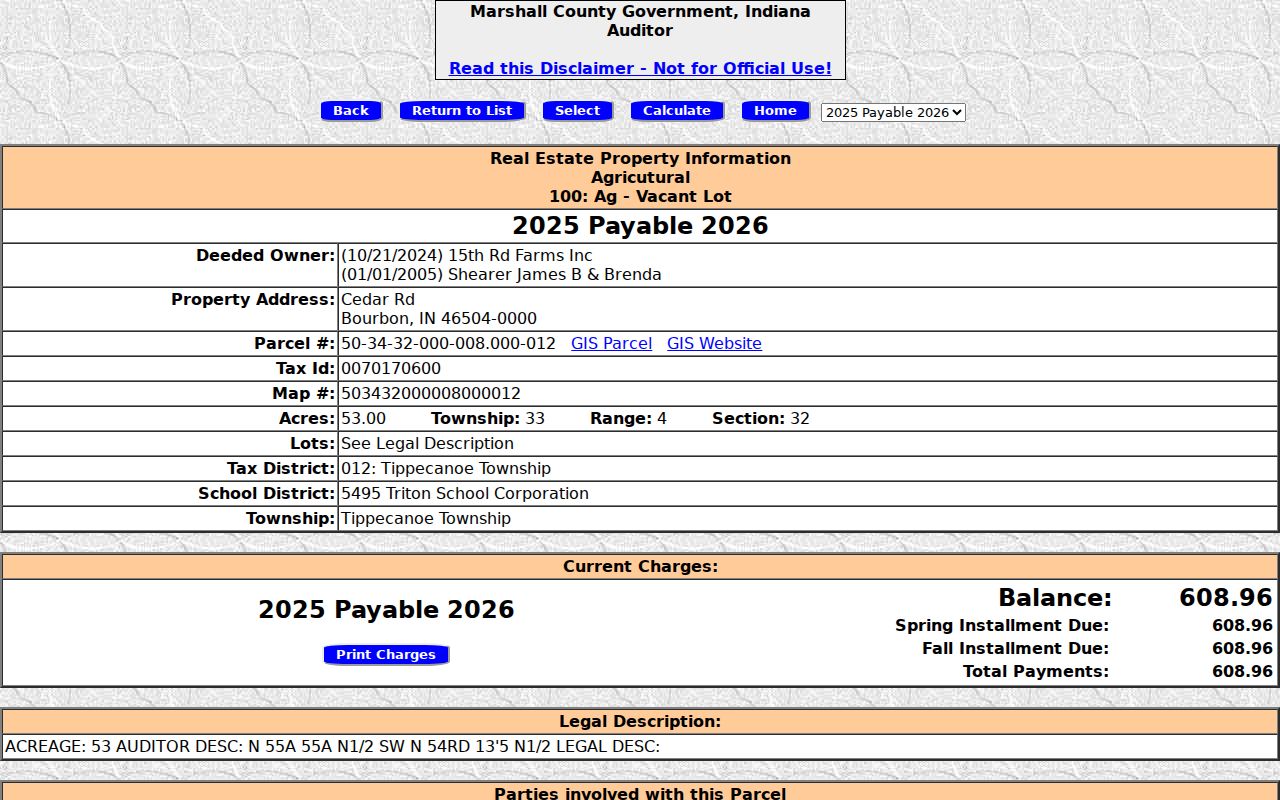
Owner, situs, mailing, and legal description need separate columns.
One Marshall Parcel, Several Keys
One Marshall County detail can show a dashed APN, an undashed PIN, and a separate tax ID side by side. Keep every printed version. Another portal may accept only one format. No official source explains the identifier generations. One observed Marshall County example pairs the dashed `50-34-32-000-008.000-012` with the undashed `503432000008000012`. Both point to the same land. After a split or combination, DataPitstop recommends an owner search. Bridge the old APN with the legal description, subdivision, lot and block, transfer date, and the Recorder's instrument number. That keeps the chain intact.
Note: A property address is a location clue. The legal description identifies the land a deed conveys.
Where Marshall Ownership Appears
No single portal answers every ownership question. Compare the assessment roll, deed index, map, and entity source according to what each was built to show.
| Source | Owner Info It Gives | Access |
|---|---|---|
| DataPitstop tax detail | Dated Deeded Owner and parcel fields | Public discovery portal |
| Recorder Tapestry/EON | Grantor, grantee, instrument and deed image | Fee-based nonmember route |
| INBiz | Entity name, status and public filings | State public search |
| Beacon GIS | Parcel geography and layer context | County-linked viewer |
An owner is whoever the recorded instrument vests. An occupant is whoever uses the property. A taxpayer or mailing recipient fills yet another role, so keep those labels separate until a deed connects them.
Marshall Entity Owners Need Exact Names
When the owner line shows an LLC, corporation, trust, or estate, run the exact name through the Recorder index. Try it again without punctuation. The Indiana INBiz Public Search adds entity and UCC filing leads. A registered agent is not always the property owner. A trustee may sign in a fiduciary role. Match the deed's grantee, capacity language, and legal description before naming the owner of record.
- Owner of record
- The party shown by the relevant official ownership record.
- Grantee
- The party receiving an interest in a deed.
- Situs
- The physical property location, separate from a mailing address.
- Title
- The legal ownership interest, which a portal result does not insure.
Fix an Empty Marshall Owner Search
An empty result is rarely a dead end. Try the full address, a shorter street form, a surname with initial, an entity name stripped of punctuation, and every parcel format already found. Tapestry guidance permits `%` in place of an apostrophe and may demand the county's exact subdivision spelling. A split, probate transfer, trust name, or recent deed can break a simple query.
When the index stays murky, contact the Marshall County Recorder in Room 201, 112 W Jefferson Street, Plymouth, at (574) 935-8515. Hours are 8 a.m. to 4 p.m. weekdays. Offer parties, dates, the APN, and legal clues. Ask whether that year is indexed, imaged, or office-only.
Watch Marshall Recording Activity
The Recorder links Property Fraud Alert for monitoring names in newly recorded documents.
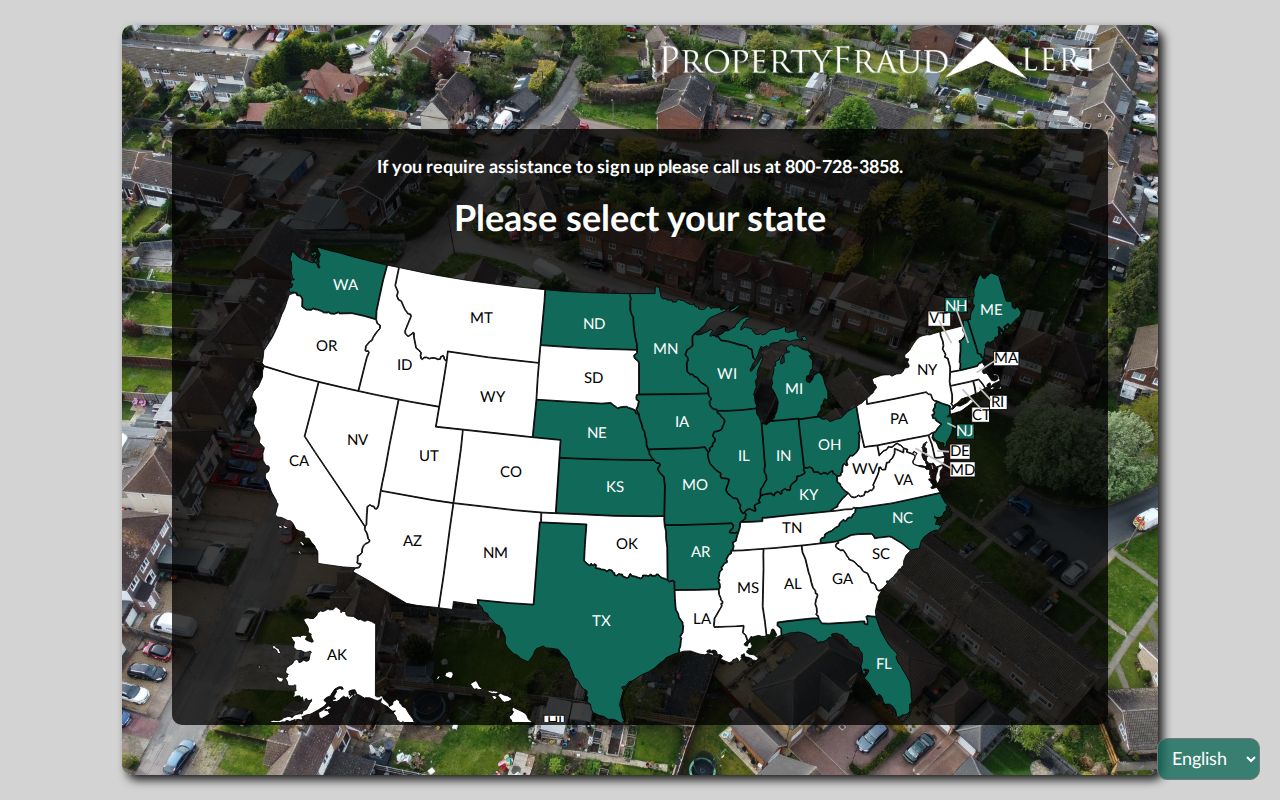
The recording watch service is just a watch tool. It is not title insurance or an ownership correction, so investigate any alert through the Recorder and compare its parties and legal description.
Save a Marshall Ownership Packet
A repeatable answer needs more than a name. Save the source URL, access date, payable year, dashed APN, undashed PIN, tax ID, property address, legal description, and the newest Deeded Owner line. Include that line's date too. Add the instrument number, recording date, grantor, grantee, document type, and the image or book-page reference. With that packet, another reader can test the result without trusting memory.
Anchor the land itself with the four-coordinate rule. It calls for legal description, parcel identifier, situs address, and the map or layer date. Keep the mailing address separate from the situs. Probate, foreclosure, boundary, or quiet-title action may explain a change. Note the case number and event date as a lead. Then return to the Recorder for the final land instrument.
When online access fails, the Recorder's counter, phone, or written-copy request is the deed fallback. The Assessor handles tax-card display problems. Older books and microfilm may sit at the Indiana State Library. IC 5-14-3 favors precision. A precise request for an existing public record beats a broad demand to identify an owner.
Shape a Recorder request around the likely grantor or grantee, the approximate recording date, legal description, APN, subdivision, and any instrument or book-page clue. Ask whether the target year is indexed, digitized, imaged, or available only at the office. Request the instrument number, recording date, parties, book and page or image reference, and any linked plat or release. That response often fixes a search that failed only because the party name was indexed differently.
An Assessor request serves a different purpose. Ask for the property card or assessment record for specific payable years. Include the owner display, Property Address, public mailing address, land and improvement value, class, deductions, sales-disclosure reference, and appeal notices. The Assessor never replaces the Recorder as custodian of the deed chain. Its parcel file, though, can supply the key that locates the correct instrument.
Use Dates to Resolve Marshall Ownership
Marshall County publishes no fixed roll-refresh interval. A closing date, assessment date, payable year, and deed recording date can land in different parts of the same record cycle. A dated Deeded Owner line can too. List them in order before calling any source stale. A deed recorded after the assessment snapshot may not show on the displayed tax year. A split can also push the transfer under a new parcel number.
Court events carry their own dates. A foreclosure complaint, lis pendens, judgment, sale, confirmation, and later sheriff's deed are separate steps. Probate may place a personal representative between an older owner and the final grantee. A trustee may hold that role instead. MyCase and the Clerk can explain the public court trail. The latest recorded land instrument remains the final confirmation lead.
Note: State the access date beside every Marshall County owner answer. Name the source too, so later readers can test its currency.
When a name stays ambiguous, compare the land description instead of the mailing address. Two people can share a surname. An entity may hold several parcels. One structure may even cross parcel lines. The complete description keeps the ownership conclusion tied to the right piece of Marshall County land. The recording reference does too.
Limits of Marshall Owner Lookups
A public record can name a recorded grantee or a dated tax-card owner. It cannot prove who lives at the address. It cannot disclose sealed or protected information. It also cannot replace title work. Indiana's Address Confidentiality Program and confidential voter rules shield qualifying people. Courts and vital records carry separate restrictions.
A defensible packet records the portal URL, access date, payable year, APN and PIN, Deeded Owner date, instrument number, and recording date. It should also capture the grantor, grantee, legal description, and image reference. When sources conflict, call the Assessor about the tax roll. Call the Recorder about the deed records.
Lawful use. Marshall County ownership records support purchase research, estate work, boundary questions, and civic review. Never use owner information to stalk, harass, or harm anyone.